


If you are asking when is the best time to paint the exterior of a house in Central Texas, the best answer is spring or fall. Aim for mid-March through late May or late September through early November. These months bring milder days, less heat risk, and better drying conditions. Still, check the forecast, wall temperature, and dew point.
When Is the Best Time to Paint the Exterior of the House for Waco Homes?
Spring and fall are the best seasons for most homes in Waco and Central Texas. Early fall is often the smoothest window because the heat drops and walls stay warm enough for paint to cure well.
The National Weather Service lists normal Waco highs near 70°F in March, 85°F in May, 81°F in October, and 69°F in November. July and August sit near 97°F. That gap matters because exterior house paint needs steady weather.
Why Are Spring and Fall Better Than Summer?
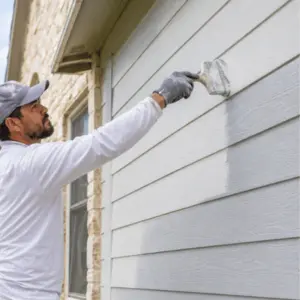
Paint needs time to flow, bond, dry, and cure. Harsh Texas heat can rush that process and cause lap marks, wrinkles, blisters, or peeling.
Spring and fall work better because they offer:
- Milder air and wall temperatures
- Longer safe work windows
- Lower risk of flash drying
- Better prep and finish conditions
Benjamin Moore notes that direct sun can make the painted surface much hotter than the air.
What Temperature for Exterior Painting Is Best?
The best range depends on the paint label. Many exterior paints work best between 50°F and 85°F. Some paints can be applied as low as 35°F, but the surface must be dry and in range.
| Brand | Common Safe Range | Key Rule |
| Benjamin Moore | Varies by product | Keep the surface more than 5°F above the dew point |
| Sherwin-Williams | Some paints down to 35°F | Stay above the dew point after painting |
| BEHR Premium Plus | 35°F to 90°F | Keep the air and surface in range for at least 4 hours |
The answer to what temperature for exterior painting is simple: check the wall, not just the forecast.
When Is It Too Hot to Paint the Exterior of a House?
When the wall is higher than the paint label limit, it gets too hot. That limit is in the range of 90°F to 100°F for many paints. Sunny walls in Central Texas can quickly surpass that threshold.
According to the National Weather Service, Waco experiences roughly 24 days at or above 100°F annually. Painting in the summer is feasible, but crews need to start early and follow the shade.
What Effects Does Humidity Have on Exterior Paint?
What Effects Does Humidity Have on Exterior Paint?
Slower Drying
Moist air prevents water in the coating from evaporating at the expected rate.
Poor Bonding
Moisture between the wall and paint can weaken adhesion and lead to early peeling.
Soft Finish
Paint may stay tacky or soft longer when humidity remains high during curing.
Stains and Blisters
Trapped moisture can contribute to discoloration, bubbling, or an uneven finish.
Watch the Dew Point
Keep the surface temperature more than 5°F above the dew point to reduce the risk of condensation forming on the wall.
Waco summer mornings can be especially damp, so the air temperature alone does not confirm that a surface is ready for paint.
Before Painting, Check:
- Walls are fully dry
- No visible condensation
- Surface temperature
- Current dew point
- Hourly humidity levels
- Rain and evening moisture
In addition to slowing drying, high humidity can result in stains, poor bonding, or a soft finish. The crucial figure is the dew point. It implies that moisture may begin to accumulate on the surface.
Benjamin Moore says the surface should stay more than 5°F above the dew point. The National Weather Service lists July average dew points above 70°F in Waco, so summer mornings can be damp. Painting should not start until the walls are dry.
Can You Paint a House Exterior in a Texas Summer?
Yes, but for most homes, summer isn’t the ideal season. Workers have to deal with heat, sun, humidity, and unexpected storms.
Painting in the summer is most effective when:
- Once the surfaces have dried, begin early.
- Observe the shade surrounding your house.
- Steer clear of hot walls in the sun.
- Use weather-appropriate paint.
- Prior to storms or evening dew, stop.
If you are deciding when to paint house exterior surfaces in July or August, check the hourly forecast and test the surface first.
What Should You Check Before Painting Starts?
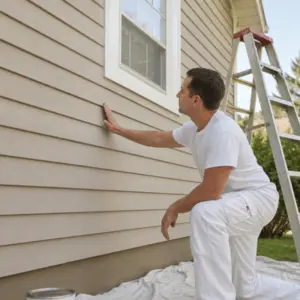
Timing is just as important as preparation. Check these things before painting begins:
- Surface dryness: Walls need to be spotless and completely dry.
- Rain risk: Steer clear of rain and strong condensation. Many paints require four hours or more to dry.
- Surface temperature: As a last resort, refer to the paint label.
- Material type: Different preparation is required for wood, stucco, siding, brick, and trim.
- Lead paint risk: Lead-based paint may be present in homes constructed prior to 1978.
When paid workers disturb paint in homes built before 1978, the EPA mandates that they use lead-safe work practices. Repairs, sanding, and scraping are all acceptable.
What’s New in 2026?
NOAA’s newer Waco climate normals are warmer and wetter than the prior 1981-2010 baseline. Newer waterborne coatings can also help lower VOCs, which are paint fumes that affect air quality. Even strong paint can fail on a hot, damp, dirty, or poorly prepared surface.
When is the best time to paint the exterior of the house in Central Texas?
Spring and fall are the best times for most homes. Aim for mid-March through late May or late September through early November. These seasons offer milder heat and better drying conditions.
What temperature is best for exterior painting?
Many paints work best on mild days between 50°F and 85°F. Certain products can be painted at temperatures as low as 35°F. Additionally, the wall needs to be dry and within the label range.
When is it too hot to paint a house’s exterior?
When the wall is higher than the paint’s safe range, it gets too hot. Depending on the product, this frequently occurs between 90°F and 100°F. It is possible for sunny walls to be hotter than the air.
After it rains, can you still paint?
Yes, but only once the surface has completely dried. Poor bonding, blistering, and peeling can result from damp walls. After heavy rain or high humidity, wait a bit longer.
How long does exterior paint need before rain?
Many exterior paints need at least 4 dry hours before moisture settles. Some products need more time in cool, humid, or dark-colored jobs. Do not paint if rain or heavy condensation is expected.
The best time to paint the exterior of the house surfaces in Central Texas is spring or fall, with early fall often being the easiest choice. Look for mild days, dry walls, low rain risk, and temperatures that match the paint label. Request a free Central Texas estimate from Choice Painting Waco.