


How long does exterior paint last? Most paint jobs hold up for 5 to 10 years, but Texas weather can wear them down sooner. Waco’s hot summers, strong sunlight, and sudden storms are tough on painted surfaces. Some homes need fresh paint after five years. Others still look good after ten.
Where your home falls in that range depends on how much sun and water each wall takes, how well the surface was prepared, and which coating was used.
At Choice Painting, we work with homeowners across Waco and Central Texas. One thing we’ve learned is that paint doesn’t always fail at the same rate. A wall that gets afternoon sun may need attention long before the shaded side of the house.
How Long Does Exterior Paint Last in Central Texas?
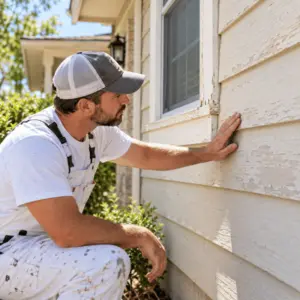
Better Homes & Gardens gives exterior house paint a typical lifespan of 5 to 10 years. That’s a useful starting point, but it isn’t a fixed deadline.
So, how often should you paint your house exterior? It depends on how well the existing paint is holding up.
Walk around your home once a year and look closely at the walls, trim, and siding. If the paint still looks sound, you may not need to repaint yet.
One easy comparison is to look under the eaves. Sherwin-Williams notes that sun fading is fairly easy to see because hidden areas, such as eaves, usually don’t fade. If the siding looks noticeably lighter than the paint tucked under the roofline, the sun has been at work.
A little fading is one thing. Peeling paint and exposed wood are another story.
Why Is Waco Weather Hard on Exterior Paint?
Anyone who’s spent an August afternoon in Waco knows how intense the heat gets.
The National Weather Service (NWS) describes Waco’s climate as humid subtropical with hot summers. July and August are also the sunniest months of the year, with daytime highs consistently in the 90s and often reaching 100°F or more. Gulf moisture keeps the humidity high, and on some summer nights the temperature doesn’t drop below 80°F.
The National Weather Service’s records from 1991 to 2020 give a good picture of Waco’s summers:
- July: The average high sits at 96.7°F.
- August: It gets even hotter, with an average high of 97.1°F.
- 100°F days: Waco sees an average of 24.3 days this hot each year.
By September 22, 2026, Waco had already recorded 50 days at 100°F or above. That’s more than double the 1991 to 2020 average and, according to the NWS, tied for the 11th most on record. The total included a 31-day run of triple-digit highs from August 3 to September 2, the fourth-longest streak in Waco’s records.
Storms add to the wear. The NWS notes that large hail, damaging winds, flooding, and tornadoes occur in Central Texas nearly every year, although Waco itself is unlikely to see all of them in a single year. Severe weather is most frequent in spring.
The sun does more than fade paint. Over time, UV rays break down the coating. Rain can then find its way through cracks or gaps around the trim.
The USDA Forest Products Laboratory identifies sunlight and moisture as major causes of wear on outdoor wood finishes. Its guide to exterior wood in the South adds that the region’s excess moisture can quickly damage a structure and wear away the finish.
It’s why two walls in the same house can look completely different after several summers.
What Affects How Long Exterior Paint Lasts?
Weather plays a big part, but it isn’t the only factor. The work done before painting matters just as much.
Here’s what makes a difference:
- Sun exposure: Walls facing south or west often take the hardest hit from sunlight. Paint maker Dunn-Edwards notes that premature fading typically shows up on surfaces with a southern exposure.
- Water damage: A leaking gutter or a gap in the caulk can let water soak into the wall beneath the paint. Dunn-Edwards also lists roof leaks, plants growing close to the siding, and siding installed too close to the ground as common causes of peeling on wood. It recommends keeping siding at least six inches above the ground.
- Surface type: Paint that works well on wood may not be the right choice for stucco, brick, or metal.
- Preparation: If the siding is dirty or the old paint is flaking, a new coat won’t stick the way it should. Wood also needs time to dry after cleaning. Dunn-Edwards advises waiting three to five days after power-washing wood before priming.
- Paint quality: A good exterior coating is made to stand up to outdoor conditions. According to Dunn-Edwards, 100% acrylic finishes resist chalking better than vinyl-acrylic paints.
- Application: Temperature, moisture, and drying time all affect how well paint bonds.
What Affects Exterior Paint Lifespan?
-
Sun Exposure
South- and west-facing walls take more sun, increasing fading and wear.
-
Water Damage
Leaks and caulk gaps let moisture behind paint, causing peeling.
-
Surface Type
Match the coating to wood, stucco, brick, or metal for proper adhesion.
-
Preparation
Remove dirt and loose paint. Let power-washed wood dry 3–5 days before priming.
-
Paint Quality
100% acrylic finishes resist chalking better than vinyl-acrylic paints.
-
Application
Follow the coating’s temperature, moisture, and drying-time requirements.
New homes aren’t exempt from these problems. Fresh wood and other new surfaces still need proper preparation.
Timing matters, too. Research from the USDA Forest Products Laboratory found that wood siding left unpainted for as little as one to two weeks starts to degrade at the surface, even though it may look unchanged. Paint applied over that damaged layer can’t form a good bond and may show cracking and peeling within a few years.
New stucco and concrete need patience as well. Dunn-Edwards recommends letting fresh masonry cure for at least 30 days before painting, or using a high-quality alkali-resistant primer when that isn’t possible.
That’s part of what we focus on with our new construction painting services. Getting the surface ready gives the finish a better chance of lasting.
How Do You Know It’s Time to Repaint?
You don’t need to wait until the paint starts falling off the house.
Some warning signs are easy to miss, especially if you don’t spend much time looking at your exterior walls.
| What You Notice | What It Could Mean |
| Faded paint | Years of sun exposure have changed the color |
| Chalky residue | The coating is breaking down at the surface |
| Cracked caulk | Water may be getting through gaps |
| Paint blisters | Heat, moisture, or poor bonding may be involved |
| Exterior paint peeling | The coating is losing its grip |
| Bare wood or metal | The surface no longer has paint protection |
Two quick checks can tell you more. For chalking, Dunn-Edwards suggests rubbing the surface with a finger or a dark cloth. All paint chalks a little as it wears, but heavy chalking can fade the color and gives new paint a poor surface to grip. For blisters, look at the layers. If only the newest coat has blistered, heat is the likely cause. If the blister goes through several coats down to the bare surface, moisture is the more likely culprit.
Don’t ignore exterior paint peeling. Covering it with another coat won’t solve the problem.
The loose paint needs to come off, and the cause should be fixed first.
For example, imagine a house painted eight years ago. The siding looks fine, but the window trim has started peeling. You may only need to repair and repaint those areas.
If several walls are peeling or cracking, a full repaint may make more sense.
How Often Should You Paint a Stucco House?
There’s no set answer to how often to paint stucco house walls. A five-to-ten-year schedule is a reasonable starting point, but the stucco’s condition comes first.
Look for cracks, fading, chalky patches, or water stains. Small cracks are common, but they shouldn’t be ignored.
One option for some stucco homes is elastomeric paint. It’s a flexible coating that can bridge small surface cracks and help keep rain out.
But it won’t fix a wall that already has a leak.
If you notice a wide crack or a damp patch, deal with that first. Painting over wet stucco can make the moisture problem worse, depending on the coating.
The best paint for your home isn’t always the thickest one. What matters is finding a product that works with your walls.
Which Exterior Paint Features Matter in 2026?
Exterior paint has come a long way from simply adding color to a wall.
Some coatings now have features that can make upkeep easier or give painters more flexibility during changing weather.
Sherwin-Williams offers two examples:
- Emerald Rain Refresh: Has a self-cleaning finish that helps rain wash dirt from painted walls. It also provides UV and weather protection.
- Latitude Exterior Acrylic Latex: Uses ClimateFlex technology and can be applied at temperatures from 35°F to 120°F, following the product’s directions.
These features are useful, especially where heat and changing weather affect painting schedules.
Still, even a high-quality product can fail if it’s applied over loose paint or a damp surface. Good preparation remains essential.
Can You Scrape Paint on an Older Home?
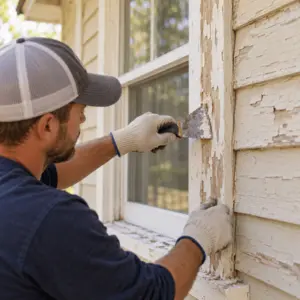
If your house was built before 1978, be careful with old paint.
Some older homes contain lead-based paint. Scraping or sanding it can release dust that’s harmful to breathe or swallow.
The federal government banned consumer use of lead-based paint in 1978, but it’s still present in millions of homes. A 2021 report from the U.S. Department of Housing and Urban Development (HUD) estimated that 34.6 million U.S. homes, about 29.4% of all housing units, have lead-based paint somewhere in the building.
The U.S. Environmental Protection Agency (EPA) has rules for many paid painting and repair jobs that disturb paint in pre-1978 homes.
Under the Renovation, Repair and Painting (RRP) rule, covered contractors must be certified and follow lead-safe work practices.
Testing isn’t always required. Contractors may treat the paint as though it contains lead and follow the required safety steps.
Before removing old paint, make sure the work can be done safely.
How long does exterior paint last on a Texas home?
Most exterior paint lasts around 5 to 10 years. Strong sun, rain, and poor surface preparation can shorten that time. Check your paint every year instead of relying only on its age.
How often should you paint your house exterior in Waco?
Every 5 to 10 years is a good planning range. You may need to repaint sooner if the siding starts peeling or the wood becomes exposed. Pay extra attention to walls that get direct afternoon sun.
Can exterior paint last 10 years in Central Texas?
Yes, it can. A well-prepared surface and quality paint can help a finish last ten years or longer. Regular cleaning and small repairs also help keep the coating in good shape.
What causes exterior paint peeling?
Water is a common cause, especially when it gets behind the paint. Poor preparation, aging coatings, and failed caulk can also lead to peeling. Find and fix the cause before putting on fresh paint.
Is elastomeric paint good for Texas homes?
Yes, it can work well on stucco and masonry, especially if the walls have fine cracks. The paint stretches slightly, helping cover those gaps and keep rain from getting through. But if the wall already has a moisture problem, you’ll need to fix that before painting.
Can you paint over old exterior paint?
Yes, as long as the old paint is clean and firmly attached. Any loose or peeling areas need to be dealt with first. If your home was built before 1978, take lead-paint precautions before disturbing the existing coating.
Should you repaint the whole house if only one wall is peeling?
Not if the damage is limited to that wall. Take a look at the rest of the house before deciding on a full repaint. If the other walls are still in good shape, you might only need to repair the peeling area.
A fresh coat of paint can make your home look better, but keeping the surface protected is what really matters. Check your exterior each year, deal with small problems early, and don’t paint over damage. If you’re unsure whether your home needs repairs or a complete repaint, Choice Painting can help. We provide exterior painting services in Waco and Central Texas. Get a free painting estimate and find out what your home needs before the damage gets worse.