


An interior paint estimate should include information on what is covered, how much it will cost, and how the job will be done. There shouldn’t be just one unclear pricing. The rooms, surfaces, prep work, paint supplies, coatings, schedule, cleanup, and overall cost are all listed in an accurate quote.
For Waco homeowners, this matters because every home is different. A small bedroom with clean walls will not cost the same as a full interior repaint with trim, doors, ceilings, and drywall repairs. The best estimate helps you compare value, not just price.
What an Interior Paint Estimate Should Include
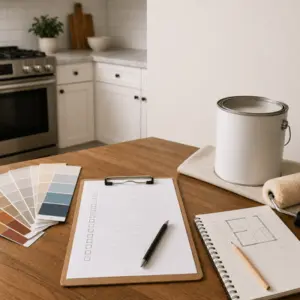
A strong interior paint estimate should be clear, written, and easy to review. The Federal Trade Commission says home improvement estimates should include the work, materials, completion date, and price.
Your quote should include:
- Rooms and surfaces: walls, ceilings, trim, doors, closets, or cabinets
- Prep work: patching, sanding, caulking, cleaning, and masking
- Primer details: where primer is needed and why
- Paint details: brand, finish, color, and number of coats
- Protection: floor covering, furniture moving, and masking
- Timeline: start date, expected work days, and completion target
- Cleanup: daily cleanup and final walkthrough
- Price: labor, materials, add-ons, and total cost
A low price may look good at first. The Texas Attorney General warns homeowners to be careful with very low bids. Some low bids may leave out key work or use cheaper materials.
A clear quote helps prevent surprises once the job starts.
How Interior Painting Quotes Are Calculated
Most interior painting quotes are based on size, surface condition, labor, and materials. A painter may measure square footage, count doors and windows, and check the walls for damage.
Paint coverage also matters. Sherwin-Williams, a major paint and coatings company, says one gallon of paint often covers about 350 to 400 square feet. Lowe’s, a home improvement retailer, notes that primer may cover about 200 to 300 square feet per gallon.
That does not mean every room uses the same amount of paint. Dark colors, rough walls, stains, and major color changes may need more coats.
Painters also count the time needed for prep. The Bureau of Labor Statistics lists prep tasks as part of a painter’s work. These may include protecting floors, filling holes, sanding, removing old paint, and applying primer.
This is why labor is often the biggest part of the price.
Common Cost Factors for Interior Painting
Two homes with the same square footage can have very different prices. Scope is the biggest reason.
Here are common items that can change the cost:
| Project Item | Why It Affects Price |
| Walls only | Usually, the simplest scope |
| Ceilings | Need more setup and careful cutting |
| Trim and baseboards | Require detail work and extra time |
| Doors | Need sanding, handling, and smooth coats |
| Cabinets | Require prep, bonding primer, and fine finishes |
| Drywall repair | Adds labor before painting starts |
| Color changes | May need primer or extra coats |
| High ceilings | May need ladders or special tools |
National cost guides often show walls-only painting at a lower price than full interior work. Projects with ceilings, trim, doors, primer, and repairs cost more because they take more time.
This is why you should compare interior painting quotes line by line. One quote may include walls only. Another may include patching, sanding, caulking, priming, trimming, doors, and cleanup.
The second quote may cost more, but it may also be the more complete job.
Sample Interior Painting Costs
| Project Type | Sample Cost Range | What It Usually Includes |
| Small room | $300 to $800 | Walls only, basic prep, standard paint |
| Medium room | $600 to $1,200 | Walls, light repairs, two coats |
| Large room or open area | $1,000 to $2,500 | Larger wall space, higher labor, more paint |
| Ceilings | $1 to $3 per square foot | Ceiling paint, cutting, extra setup |
| Trim and baseboards | $1 to $4 per linear foot | Sanding, caulking, detail work |
| Interior doors | $75 to $200 per door | Prep, sanding, smooth coats |
| Full interior repaint | $3,000 to $10,000+ | Multiple rooms, prep, walls, possible trim and ceilings |
What Waco Homeowners Should Know
Most basic interior painting work does not need a permit in Waco. The City of Waco says that finishing work, such as painting, flooring, and cabinets, does not require a permit. A permit may be needed if the project includes electrical, plumbing, or mechanical work.
Older homes need extra care. The EPA says many homes built before 1978 may contain lead-based paint. If painting work may disturb old painted surfaces in a pre-1978 home, an EPA-certified firm may be required.
This is important for homes, schools, childcare spaces, and other child-occupied areas. Lead dust can be hazardous when old paint is sanded, scraped, or disturbed.
Before You Hire an Interior Painting Contractor
Ask these questions before you approve the quote.
What surfaces are covered?
What prep work is involved?
Will primer be applied?
How many coats come with it?
What paint brand and sheen?
Is cleanup part of it?
How long is the quote valid?
Before you hire an interior painting contractor, ask:
- What surfaces are covered?
- What prep work is involved?
- Will primer be applied?
- How many coats come with it?
- What brand of paint and sheen?
- Is cleanup part of it?
- How long is the quote valid for?
These questions help make it easier to compare quotes fairly.
Paint Trends and Indoor Air Tips for 2026

Warm, cozy colors are popular in 2026. Sherwin-Williams named Universal Khaki the 2026 Color of the Year. Benjamin Moore’s 2026 Color of the Year award went to Silhouette.
These colors show a tendency toward softer neutrals, cozier settings, and darker accent colors. Homeowners frequently choose warm beige, muted green, milky white, soft brown, and darker trim colors.
Indoor air quality is also important. VOC levels might be higher indoors than outdoors, according to the EPA. Certain paints and household goods have the potential to emit volatile organic compounds (VOCs).
To improve airflow during painting:
- Open windows when the weather allows
- Use fans to move air outside
- Choose low-VOC paint when possible
- Keep children and pets away from wet paint
- Ventilate rooms during and after painting
A good painter can help you choose the right paint finish for each room. For example, eggshell or satin often works well for busy walls. Semi-gloss is common for trim and doors because it is easier to clean.
What should an interior paint estimate include?
The work, supplies, schedule, and cost should all be included in an interior paint estimate. The rooms, surfaces, prep work, priming, coatings, and cleanup should all be listed. Both the painter and the homeowner are protected by a clear estimate.
Why are interior painting quotes so different?
Quotes often differ because the scope is different. One painter may price walls only. Another may include drywall repairs, sanding, caulking, primer, trim, doors, and cleanup. Always compare the details, not just the total price.
Is the lowest interior painting quote the best choice?
Not always. A very low quote may leave out prep, primer, or cleanup. It may also use lower-quality materials. A fair quote should explain the work clearly and match the condition of your home.
Can I use an online calculator for my budget?
Yes, but only roughly. Online calculators don’t know your walls, your trim, your ceiling height, your damage, or your color change. Use these to plan and then get a written quote from a local painter.
How to pick an interior painting contractor?
Look for an interior painting contractor who provides a clear written quote. Ask about preparation, paint products, number of coats, timeline, and cleanup. Check reviews and make sure the painter explains the work in layman’s terms.
Should I search for interior painting services near me?
Local painters know the area’s homes, weather, and typical surface problems. Working with a local team can also make scheduling more convenient for Waco homeowners.
How much does it cost to paint an entire house interior?
The cost to paint an entire house interior depends on the home’s size, wall condition, number of rooms, ceiling height, paint type, and whether trim, doors, ceilings, or repairs are included. A smaller interior repaint may cost a few thousand dollars, while a larger full-home project with prep and detail work can cost much more. A written quote is the best way to get an accurate price.
Does interior painting include ceilings and trim?
Not always. Some interior painting quotes include walls only, while others include ceilings, trim, doors, closets, or cabinets. Always check the estimate to see exactly what surfaces are included before comparing prices.
How long does interior paint last?
If the surface is properly prepped and the appropriate finish is applied, interior paint can survive for several years. Due to increased wear, dampness, and cleaning, busy spaces, including hallways, kitchens, bathrooms, doors, and trim, may require repainting sooner.
You may avoid guesswork, unstated expenses, and hurried work with a clear interior paint estimate. Look for more than simply the lowest number. Look for scope, trust, products, and preparation. Get a free inside paint estimate from Choice Painting right now if you’re looking for a clear, comprehensive price for your Waco house!